Blog

  • 5 Reasons you should Self-host your DIY Smart Home

    5 Reasons you should Self-host your DIY Smart Home

    I have been building and enjoying my DIY smart home for over 8 years now, with smart CCTV and smart home automation.

    Back when I started, almost all IP cameras worked perfectly without any connection to the Internet. They also had local storage for recording video clips.

    The only reason for the camera to connect to the manufacturer’s servers was if the customer activated the P2P option.

    This made sense – the best way to let customers access their IP cameras remotely was using P2P servers. Port forwarding is not user-friendly, especially for those who are less tech-savvy. This also enabled easy push notifications.

    Then security camera makers hit upon a great plan to boost their profits – make their products reliant on their ‘cloud’.

    Hmm, how did they do this?

    Why you should self-host your DIY Smart Home

    Simple, take a perfectly fine IP camera and cripple it. First, make it so that you cannot set it up without an Internet connection. Also make it require an active Internet connection for the camera to work and record clips to the local SD card.

    Why stop there, right? Human greed knows no bounds. Just get rid of the local storage and offer a free cloud recording plan which allows you to see clips from the past few days.

    And so today we have reached a state where your mainstream security cameras like Nest, Ring, Wyze, Arlo are all dependent on the Internet and sometimes even the manufacturer’s cloud servers to function.

    Some go even so far as to make you pay a monthly fee for things that used to be free a few years ago – like the ability to store data locally, create motion detection zones, advance motion detection, and even smart home integration (like with Alexa, Google Home, Apple kit etc.).

    The crafty strategy that businesses have devised is this : gain market share by hyping up cheap under-powered hardware with attractive features at very low prices, force customers to pay a monthly fee to use said advertised features, lock customers into the manufacturer’s walled-garden product eco-system, and profit.

    I have steadfastly avoided getting sucked into this mess of hardware that is useless without an Internet connection. I have done this by hosting my own smart home, instead of outsourcing my data and privacy to some ‘cloud’ servers that sit who knows where.

    [wpsm_toplist]

    [text-blocks id=”5527″]

    1. Protect your family

    Here’s an unpopular opinion: the only thing a security camera should need to work is power. Not a ‘cloud recording plan’, and not even an active Internet connection.

    A security camera has a critical job – no matter what happens, keep recording. It is as simple as that. If you have set up motion detection, then record when motion is detected.

    Your outdoor smart lights have a simple job – when motion is detected, light up.

    None of the above should require an Internet connection.

    An example: The uber popular cheap Wyze cam cannot do motion detection unless it is ‘online’, in other words it needs an active connection to Wyze cloud servers.

    Your smart home hub has a simple job – if an alarm is triggered, let you know through push notifications or an email. This should not be conditional on a 3rd party cloud server halfway across the world.

    Why Self-host your Smart Home - VueVille

    If your smart home cannot function independently, then its not fit for purpose.

    This is the main reason I did not opt for Samsung SmartThings back then because it didn’t have local processing. This led to various issues such as smart lights that turn on by themselves, service outages, and even people getting locked out of their homes because Samsung’s cloud servers failed.

    With the v2 Hub released in 2018, Samsung got better at local processing because it was obvious even to them that a cloud-reliant smart home is useless.

    Unfortunately, it has since emerged that even the new hub is reliant on Samsung’s cloud servers staying online for the most part. Something they regularly fail to do.

    2. Protect your privacy

    When you place your data on the cloud, it is shipped electronically to data centers around the world. The cloud is just a layman’s term for the massive data centers that most tech companies use to store user data.

    You probably haven’t realized that you have outsourced the responsibility of protecting your data to multiple companies you don’t even know. Some of these data centers may be in countries where there are very poor privacy protections laws.

    And we all know how good tech companies are at protecting our data: The infamous Apple iCloud hack where celebrities found their secrets made public, and now the revelation that Apple secretly dropped end-to-end encryption on their iCloud 2 years ago under pressure from the FBI.

    Now when it comes to your smart home and security cameras, things can become very sinister.

    Here’s a list of recent hacks and privacy issues that have plagued the most popular cloud-based smart home hubs:

    Please do not buy cloud-reliant gear. Buy smart home devices that do not require to be connected to the Internet at all.

    3. Save money

    The biggest issue with Internet and cloud-reliant smart home gear is that to make full use of the hardware, you often need to pay a monthly fee.

    The hall of shame:

    What do you do when your cloud-reliant smart home hub manufacturer goes bust? Ask Revolv (now Google Nest) or even Wink customers.

    Any smart home gear that is reliant on a cloud service leaves you to the whims and fancies of the manufacturer.

    Buy only smart home hear that is not reliant on a cloud service.

    4. Defeat planned obsolescence

    The Sonos fiasco is the best example of unbridled corporate greed taking advantage of gullible customers. There used to be a time when high-end audio equipment would last a generation, if not more.

    A few days ago, Sonos in its infinite wisdom decided that you shall not use a product of theirs if its more than a few years old. Some of the affected products are hardly 5 years old. It’s also worth noting that the whole USP of Sonos speakers is the ease of use and reliability.

    To rub it in, not only will they not provide software updates for the ‘obsolete’ speaker, but all your other newer Sonos speakers would also be blacklisted and stop receiving security updates.

    Yes, how dare you buy a brand new Sonos speaker and use it alongside a previous generation Sonos speaker at the same time! Dump that old speaker pronto. Who cares if its still perfectly functional? The environment? Bah! Nothing can stand in the way of profits and that all important share price!

    The naked greed of Sonos was exposed when they made this announcement.

    After severe backlash from existing customers, they walked it back a bit. Now they say your ‘legacy’ hardware will have to be spun off to a different network.

    The irony here is that the whole reason people got Sonos gear was to build whole-house audio. It just doesn’t make sense to have different audio networks in the same house which don’t work with each other!

    Before Sonos apologists come at me with their pitchforks, let me say that most tech companies behave this way.

    The only reason Sonos are trying on this nonsense is because they are planning obsolescence into their products.

    Also I am reminded of Apple deliberately slowing down old phones so that customers would upgrade to newer models. So shady.

    I am sure we will soon hear of such cases with security cameras as well – if your security camera is cloud-reliant, you are at the mercy of the manufacturer. They can turn your camera into a brick whenever they please.

    Don’t buy cloud-reliant or Internet-reliant cameras. Would you buy a TV that wouldn’t work without a cloud server? How much more important then is something that protects your family?

    5. Create your own customized smart home

    If you pick a DIY smart home hub like the HomeAssistant like I did, you get a lot of flexibility.

    You can keep things super-simple or opt for features like powerful integration with your home security system. It’s up to you!

    To learn more about the best way to get started with a DIY Smart home, have a look at my easy-to-follow guide to smart homes.

    If you would like some inspiration, check out my own DIY smart home build.
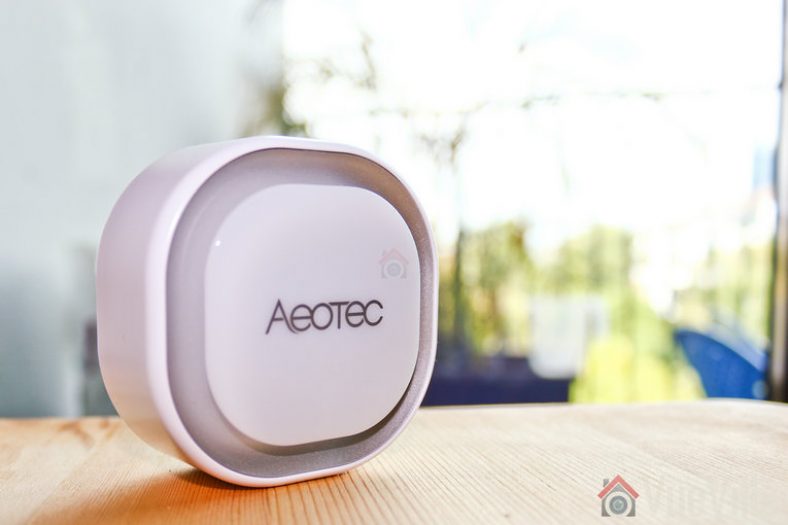
  • Hands-on Review: Aeotec Doorbell 6 (ZW162)

    Hands-on Review: Aeotec Doorbell 6 (ZW162)

    Hands-on Review - Aeotec Doorbell 6 Z-Wave - VueVille

    What if you are not interested in a wireless video doorbell, but still want a smart doorbell? The [easyazon_link identifier=”B07DC569FL” locale=”US” tag=”vueville.com-eaz-20″]Aeotec Doorbell 6[/easyazon_link] is one such wireless smart doorbell based on the Z-Wave standard.

    This doorbell can be added to your Z-Wave network to send you push notifications whenever the bell is pressed. You can also trigger other actions such as turning on porch lights, or recording a camera that covers your porch.

    Aeotec kindly provided a review sample and we tested it in our own DIY smart home.

    Here’s the video review:

     
    [wpsm_titlebox title=”Contents” style=”1″][contents h2][/wpsm_titlebox]

    Aeotec – who are they?

    Aeotec used to belong to Aeon Labs, the company founded in 2006 and based out of Silicon Valley. But that’s no longer the case. Aeotec also have another brand that’s popular in the smart home market – Popp.

    They also are an OEM for Oomi.

    Un-boxing

    Hands-on Review - Aeotec Doorbell 6 Z-Wave - Box Contents - VueVille

    The box contents are:

    • Aeotec Doorbell 6 Chime unit
    • Chime wall adapter
    • Bell push button and wall plate
    • 3M double-sided tape, screws
    • Power adapter
    • Button cell for bell push button
    • Quick start guide
    • Warranty card

    Specifications

    • Product Model Number: ZW162
    • Dimensions Chime: 76*76*38.5mm Button: 85*38*14mm
    • Weight
      • Chime: 100g
      • Button: 35g
    • Operating temperature: 32° to 104° F (0° to 40° C)
    • Relative humidity: 8% to 80%
    • Wireless Technology:
      • Z-Wave (Between Chime and Gateway)
      • 433.92MHz/FSK (Between Chime and Button)
    • Z-Wave Plus: Yes
    • Z-Wave Module: ZM5101
    • Security Class: S0, S2 Unauthenticated/Authenticated
    • Over The Air (OTA) Updates: Yes, requires Z-Stick USB
    • Distance between Chime and Z-Wave Gateway: 30m (Indoor) /150m (Outdoor)
    • Button Control distance between Chime and Button: 120m (Barrier-free sight line distance)
    • Input Voltage Chime:
      • Battery, 3.7V; Power Adapter, DC 5V/2A
      • Button: Battery, 3V
    • Chime’s Battery:
      • Model: PT502035
      • Capacity: 400mAh
      • Detachable: No
      • Chargeable: Yes. Charging via Chime Power Adapter.
      • Endurance: 4 hours
    • Button’s Battery:
      • Model: CR2450
      • Capacity: 630mAh
      • Detachable: Yes
      • Chargeable: No
      • Endurance: 2 years
    • Power Consumption Chime: IWORK < 80mA, I STANDBY < 70mA
    • Button: IWORK < 20mA, I STANDBY < 0.1uA
    • Splash, Water, and Dust Resistant
    • Chime: Not Waterproof
    • Button: Rated IP55 under IEC standard 60529
    • Sensors: Vibration Sensor
    • Supported Paired Buttons Max: 3
    • Tones Storage Size 16MB
    • Supported Tones Max: 30; (No interface to replace the built-in tones. If want to change these built-in tones, you need to contact us to customize).
    • Volume Max: 105dB from 10cm away; 7 adjustable volume levels

    Design and Hardware Features

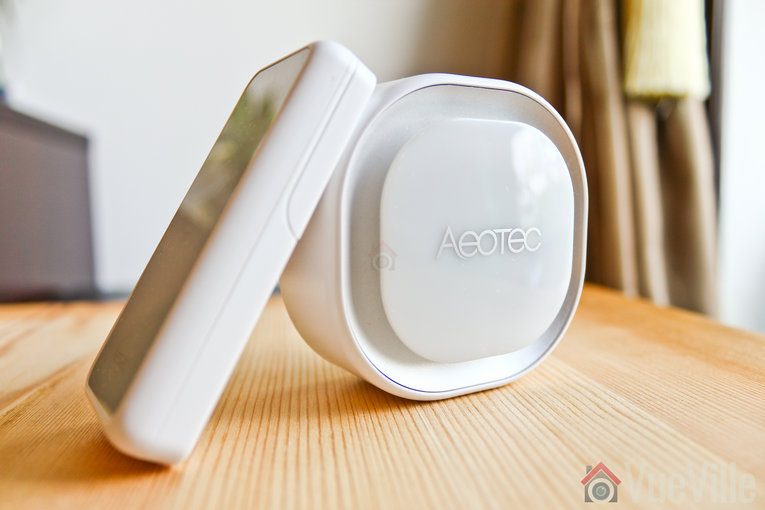
    The Aeotec Doorbell 6 has two halves – the chime unit and the ring button.
    Hands-on Review - Aeotec Doorbell 6 Z-Wave - Chime and Button - VueVille
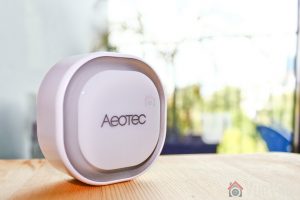
    The chime unit unit has a premium look and feel about it. There is a white LED embedded in the front face and lights up when the chime rings. The LED in the chime unit is actually a very powerful 1000 lumens strobe light as well.

    Why does a doorbell have such a powerful LED? Because the chime unit is also engineered to be a standalone siren, in fact it is the exact same thing sold as the Aeotec Siren 6.
    Hands-on Review - Aeotec Doorbell 6 Z-Wave - Chime - VueVille
    The chime has a 105dB speaker. You can also add up to 3 additional buttons to the same chime unit. Aeotec sells these as [easyazon_link identifier=”B07PB3NPPJ” locale=”US” tag=”vueville.com-eaz-20″]accessory buttons[/easyazon_link]. The signal between the chime unit and the bell button is a 433MHz ultra low-power signal. This also maximises the range between the two.

    The chime has a built-in rechargeable battery, but surprisingly it only has a capacity of 400mAh. Not much for a doorbell chime if you ask me. However, it is designed to be powered with the included power adaptor. So for powering the doorbell through a brief power cut, the battery seems to be fine.

    What about tamper-resistance? The chime has a sensitive vibration sensor. So once you include the doorbell in your Z-Wave network, the siren will go off if you move the chime. The Z-Wave tamper device will also be triggered at your Z-Wave controller.

    The chime unit is not water-proof by the way, it is intended for indoor use only.

    Hands-on Review - Aeotec Doorbell 6 Z-Wave - Chime Rear - VueVille

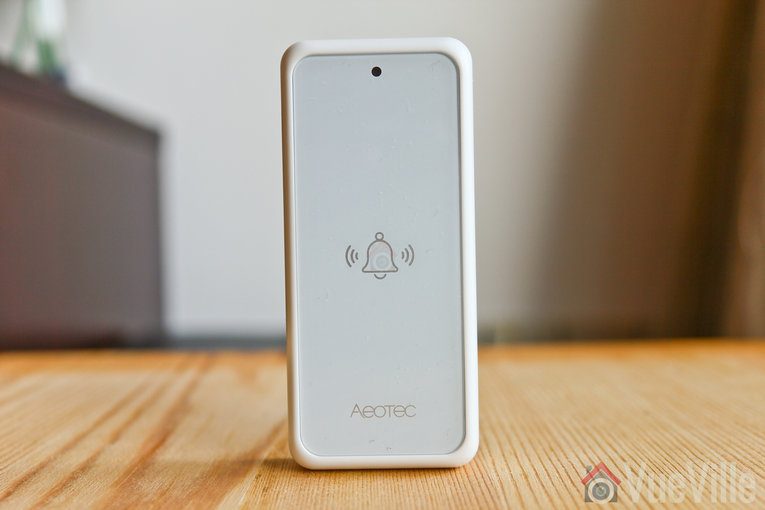
    The bell button has a tiny LED at the top that blinks twice when you push the bell. An included CR2450 3V button cell powers the button. It has a capacity of 630mAh and is rated for 2 years use.

    The bell button is water-proof with an IP55 ingress rating.
    Hands-on Review - Aeotec Doorbell 6 Z-Wave - Bell Button - VueVille

    Software Features

    The chime unit uses Z-Wave to communicate with your HA controller/hub. The chime unit has 16MB storage and comes with 30 tones pre-installed. You cannot add more unless you delete a few existing ones.

    The 30 tones range from the standard ding-dong tone, a Christmas tree tone, and various alarm tones such as smoke, CO and even a tornado siren!

    The doorbell has a surprising number of unusual features such as a Z-Wave signal quality tester.

    You can also change the chime LED light effect. This is achieved by changing certain parameters described in the engineering document. I find the vibration sensor alarm unnecessary, and thankfully you can mute it or reduce the alarm volume by modifying parameter 0x11(17). Just like other Aeotec products, the doorbell is extremely customisable. You just need to check whether your Z-Wave controller can send parameter configuration commands.

    Installation and Setup

    The bell button can be easily installed beside your door with the included 3M double-sided tape or the small screws.

    I plugged in the chime unit using the provided power adaptor.

    My smart home automation system is built on Z-Wave using the excellent HomeSeer HS3 software. I use an Aeotec Z-Stick USB device as the Z-Wave radio, plugged into a Dell Inspiron laptop running HS3.

    Pairing the Aeotec Doorbell 6 with my Z-Wave controller

    1. As per the quick start guide, I plugged in the Doorbell 6 chime unit. The front white LED started blinking in heartbeat style.
    2. I then had to set HomeSeer HS3 into ‘Inclusion mode’. For this I navigated to Plugins > Z-Wave > Controller Management. Under Actions, I selected ‘Add/Include a Node’ and clicked the Start button.
    3. I pressed the action button on the rear of the doorbell once. If your hub requires S2 security, you can enter the first 5 digits of the DSK printed on the back of the doorbell.
    4. The inclusion process finished successfully in HS3. According to the manual, doorbell’s white LED should then turn solid white for 30 seconds to indicate successful inclusion, but it didn’t. Nevertheless the doorbell was included successfully.
    5. I could then see all the different devices the doorbell created in my HS3 devices list.

    Performance

    Loudness

    The chime can get very loud indeed. If you place it at a central location in your home, you should hear it from pretty much any room.

    Wireless Range

    The first thing I tested is the range between the bell and the chime. Remember this does not use Z-Wave, just a standard signal like an ordinary wireless doorbell. Aeotec claims the range between the chime and the button is up to 90 metres. I had no trouble with the chime ringing throughout my home, so the stated range sounds right.

    Next up was the range between the chime and my Z-Wave controller. My home is of solid concrete construction and where I have placed the chime means that the Z-Wave signal has to penetrate at least 2 solid concrete walls. This the chime unit did with ease.

    The mesh network design of Z-Wave networks allows the doorbell chime unit to act as a repeater . So the chime unit actually extended the reach of my Z-Wave network.

    Responsiveness and Reliability

    Whenever I pressed the button, the chime instantaneously rang. There was mo delay in the device status updating in HS3 either.

    Compatibility

    The Aeotec Doorbell 6 is officially compatible with Samsung SmartThings, Fibaro HomeCenter and Popp Hub. But as you can see from my review, it works with HomeSeer HS3 also.

    Zack at Self-hosted Home has got it to work with HomeAssistant event though its not officially supported.

    You can see the full compatibility list on the Aeotec website.

    Verdict

    I have been using the Aeotec Doorbell 6 for over 4 months now. A smart doorbell means that I can now trigger actions such as turning on porch lights and sending notifications to mobile devices.
    [review]

    Where to Buy

    Buy the Aeotec Doorbell 6 from [easyazon_link identifier=”B07PB2HN6D” locale=”US” tag=”vueville.com-eaz-20″]your local Amazon store[/easyazon_link].

  • Hands-on Review: Aeotec LED Bulb 6 Multi-Colour

    Hands-on Review: Aeotec LED Bulb 6 Multi-Colour

    If you are building a new home or renovating, it makes sense to go for Z-Wave wall switches from the start. But if you want to add smart lighting to your home without changing wall switches, smart bulbs are a great option.

    Multi-colour (RGB) LED smart bulbs have been around for some time now. But to get true warm white shades, you need to go for an RGBW LED bulb. The W stands for White. The [easyazon_link identifier=”B07DC569FL” locale=”US” tag=”vueville.com-eaz-20″]Aeotec LED Bulb 6[/easyazon_link] is one such RGBW that supports Z-Wave.

    Aeotec kindly provided a review sample and together with my 3 year old, we put The LED Bulb 6 through its paces. Watch the video review:

    [text-blocks id=”earning-disclaimer”]

    [wpsm_titlebox title=”Contents” style=”main”][contents h2][/wpsm_titlebox]

    Aeotec – who are they?

    Aeotec used to belong to Aeon Labs, the company founded in 2006 and based out of Silicon Valley. But that’s no longer the case. Aeotec also have another brand that’s popular in the smart home market – Popp.

    They also are an OEM for Oomi.

    Un-boxing

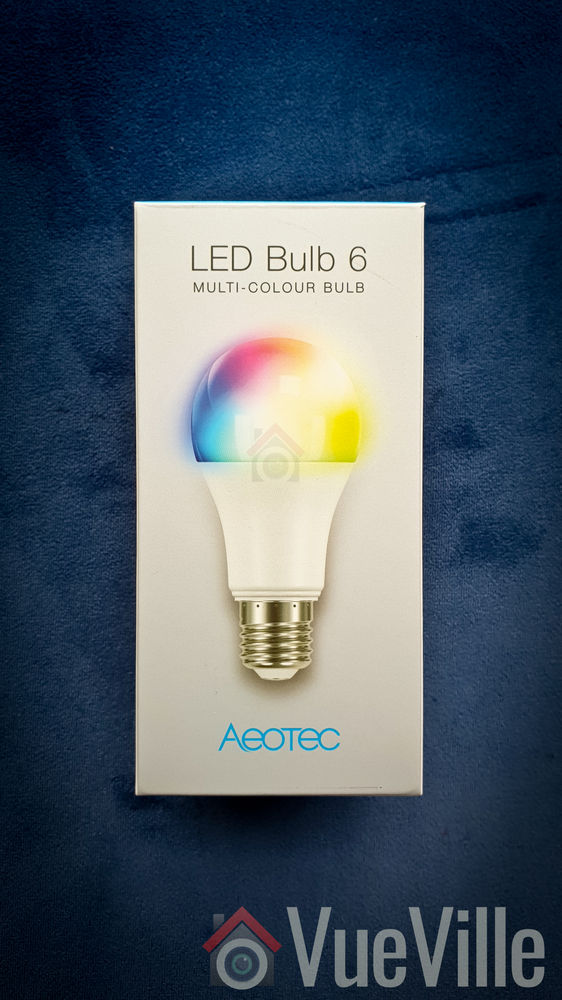
    Hands-on Review - Aeotec LED Bulb 6 Z-Wave - Box Front - VueVille

    Hands-on Review - Aeotec LED Bulb 6 Z-Wave - Box Back - VueVille
    Hands-on Review - Aeotec LED Bulb 6 Z-Wave - Box Side - VueVille

    Hands-on Review - Aeotec LED Bulb 6 Z-Wave - Box Top - VueVille

    Specifications

    • Model number: ZWA002
    • Repeater: Yes
    • Beaming: Yes
    • Z-Wave Plus: Yes
    • S0 Security Support: Yes
    • Product dimensions: 120 x 60 / 118 x 60 mm
    • Voltage Range: 110 – 240 VAC @ 50/60Hz
    • Maximum power: 9.5W
    • Standby power: Average: 0.2W, Max: 0.4W.
    • CCT(K): 2700 – 6500K
    • CRI: 80
    • Beam Angle: 240 degrees
    • Operational temperature: 0 – 50 C
    • LED Color: Multi-Color (RGB, Warm or Cold White)
    • Action button type: External switch connected to bulb.
    • Communication range: Up to 100m outdoors in an open field, or up to 80m indoors (varying range depending on building structure and environment).
    • Communication certification: Z-Wave Plus

    Design and Hardware Features

    The Aeotec LED Bulb range has 3 models:

    • LED Bulb 6 Multi-White – Tuneable white LEDs can make warm and cold white colours only
    • LED Bulb 6 Multi-Colour – RGBW LEDs to produce 16 million colours including warm white
    • LED Bulb Gen5 Multi-Colour – RGB LEDs to produce 16 million colours including warm white

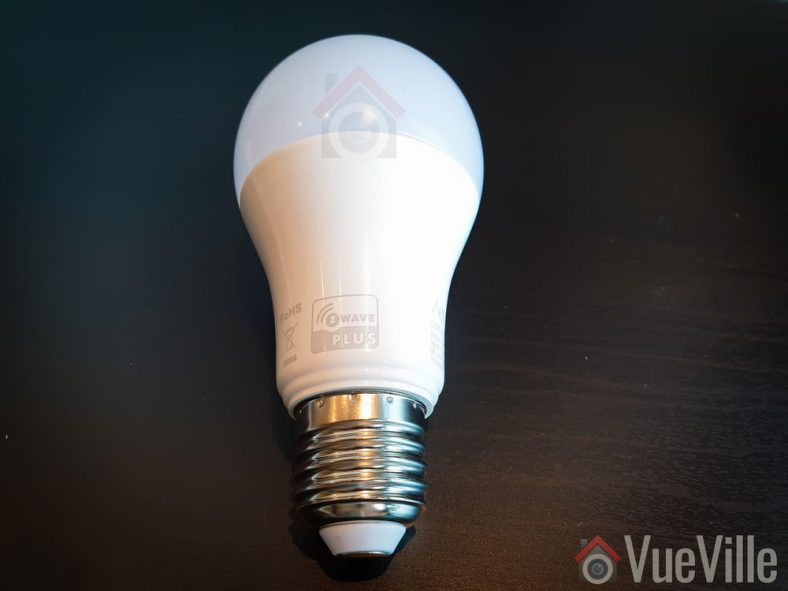
    The LED Bulb 6 Multi-Colour with RGBW LEDs is the pick of the crop, because you can generate true warm white shades, not ones that look yellowish.

    The bulb is also very bright with 806 lumens of light output, at a power consumption of only max 9.5W.

    At the same time you also get a very wide beam angle of 240 degrees. You have to be very careful about this when buying LED bulbs, to avoid the dreaded spotlight effect.

    Software Features

    On the software side, the LED bulb works on the Z-Wave platform. It supports S0 security for the smart hubs that require it.

    The bulb can produce over 16 million different colours. You can dim the output all the way down to 5%.

    Installation and Setup

    The main draw of a smart LED bulb is that you can just screw it into an existing lamp fitting. No need to pull out the toolkit and change wall switches or do any wiring work.

    My smart home automation system is built on Z-Wave using the excellent HomeSeer HS3 software. I use an Aeotec Z-Stick USB device as the Z-Wave radio plugged into a Dell Inspiron Laptop.

    Pairing the Aeotec LED Bulb 6 with my Z-Wave controller

    Watch my Youtube video below to see how I set up the Aeotec LED Bulb 6.

    1. As per the quick start guide, I inserted the LED Bulb 6 into a table lamp.
    2. I then had to set HomeSeer HS3 into ‘Inclusion mode’. For this I navigated to Plugins > Z-Wave > Controller Management. Under Actions, I selected ‘Add/Include a Node’ and clicked the Start button.Hands-on Review - Aeotec LED Bulb 6 - Z-Wave Inclusion 1 - VueVille
    3. I turned on the power to the LED Bulb 6. It turned solid yellow for a few seconds and then did a colour dance, flashing rapidly between white and green. At the same time I could see that HS3 had added the LED Bulb 6 as a new node. Then the bulb turned solid yellow again.Hands-on Review - Aeotec LED Bulb 6 - Z-Wave Inclusion 2 - VueVille
    4. As per the manual, the bulb had been successfully included in my Z-Wave network.
    5. I could then see all the different devices the Bulb created in my HS3 devices list.Hands-on Review - Aeotec LED Bulb 6 - Z-Wave Devices - VueVille

    Performance

    Wireless Range

    The LED Bulb 6 has very good Z-Wave range. My current home is of solid concrete construction and the Z-Wave signal could penetrate 2 solid concrete walls easily. The mesh network design of Z-Wave networks allows the LED bulb to act as a repeater . So the bulb actually extended the reach of my Z-Wave network.

    Responsiveness and Reliability

    I observed no noticeable delays or issues during the course of testing. The ramping up and down of the bulb in response to commands started as soon as HS3 sent a command.

    Compatibility

    The Aeotec LED Bulb is compatible with HomeSeer HS3, Samsung SmartThings, and HomeAssistant . At present, it is not compatible with Homey.

    Verdict

    I have been using the Aeotec Z-Wave LED Bulb 6 for over 4 months now and love it. I have integrated it into my smart home, in fact it serves as my morning light alarm (I use this to wake up instead of a traditional sound alarm).

    [review]

    Where to Buy

    Buy the Aeotec LED Bulb 6 from [easyazon_link identifier=”B07DC569FL” locale=”US” tag=”vueville.com-eaz-20″]your local Amazon store[/easyazon_link].

  • IronWolf vs. IronWolf Pro – NAS Hard Drives Compared

    IronWolf vs. IronWolf Pro – NAS Hard Drives Compared

    For a few years now I have been using WD RED NAS hard drives in my DIY NAS NVR. But these are running 24/7 and its only a matter of time before I need to start replacing them one by one.

    So I have been researching the various NAS hard drives from WD, Seagate and other top brands. I looked at WD RED vs. Seagate IronWolf drives recently. That’s when I came across the Ironwolf Pro range.

    Let’s take a closer look at how the IronWolf differs from the IronWolf Pro.

    Ironwolf vs IronWolf Pro - NAS Drives Compared - VueVille

    A quick note: As an Amazon Associate I earn from qualifying purchases. This post contains affiliate link(s). An affiliate link means I may earn advertising or referral fees if you make a purchase through my link, at no extra cost to you.

    IronWolf vs. IronWolf Pro – Comparison Table

    [table id=76 responsive=scroll /]

    (* = affiliate link / image source: Amazon Associates Program)

    IronWolf vs. IronWolf Pro – Features

    Seagate IronWolf 8Tb NAS Internal Hard Drive HDD – 3.5 Inch SATA 6GB/S 7200 RPM 256MB Cache for Raid Network Attached Storage (ST8000VN0022),Silver
    ×
    Product prices and availability are accurate as of the date/time indicated and are subject to change. Any price and availability information displayed on https://www.amazon.com/ at the time of purchase will apply to the purchase of this product.

    The biggest difference between the Ironwolf & Ironwolf Pro is the number of drive bays supported:

    • IronWolf is aimed at Home, SOHO and small business NAS drives with up to 8 drive bays.
    • IronWolf Pro, on the other hand is for businesses and digital artists who need extremely high performance from their NAS servers with up to 24 drive bays.
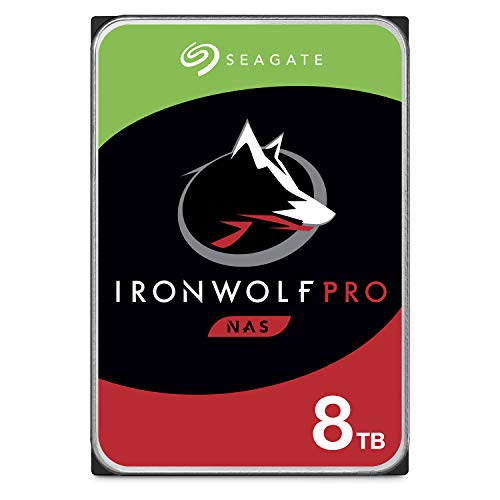
    Seagate IronWolf Pro 8TB NAS Internal Hard Drive HDD – 3.5 Inch SATA 6Gb/s 7200 RPM 256MB Cache for RAID Network Attached Storage, Data Recovery Service – Frustration Free Packaging (ST8000NEZ01)
    ×
    Product prices and availability are accurate as of the date/time indicated and are subject to change. Any price and availability information displayed on https://www.amazon.com/ at the time of purchase will apply to the purchase of this product.

    Another major difference is the rotational speed. As you can see in the comparison table above, the larger Ironwolf drives from 8 TB and upwards rotate at 7200 rpm but the smaller capacity models run at 5400 or 5900 rpm. But all the IronWolf Pro drives run at 7200 rpm.

    Performance

    The IronWolf Pro has a much higher rated transfer speed than the IronWolf, as can be seen in the comparison table above.

    However in real life, which drive is faster will depend on what type of enclosure or rack you are using.

    In a smaller enclosure, the IronWolf may pull ahead whereas in larger enclosures or storage racks, the Pro version will have better performance. This can be attributed to the vibration optimizations of the Pro version.

    All IronWolf and IronWolf Pro drives utilize write-back caching.

    Reliability

    Seagate has improved the the workload rating of the Ironwolf Pro drives from 300 TB/year to 550 TB/year. This is a welcome change. However, the standard Ironwolf’s rating remains at 180TB/year. But that doesn’t tell us the full story.

    While we may not have specific reliability data for the Seagate Ironwolf and WD RED drives, one cloud storage provider regularly publishes drive failure data for all the drives it uses – Backblaze.

    Please note that the Seagate hard drives they use are the Exos variety, not Ironwolf. Still, it gives us some sense of how reliable the Seagate brand is.

    Looking at the latest Backblaze data, in general at lower capacities, Seagate seems to have slightly lower reliability. Although do note the sample size is much larger in Seagate’s case for most drive sizes, generally the higher the sample size, the more accurate the data becomes.

    Noise

    The Ironwolf has a noise level rating of 20-30dB, which is low enough to place the NAS in your living room or in your study.

    Not all IronWolf Pro drives are as quiet because the professional audience that the Pro drives target do not really care much about sound levels. But they still stay under a pretty quiet 32 dB level.

    VueVille Verdict

    The IronWolf is our choice for most home users. If you are using a storage rack or an enclosure with more than 8 bays, go for the IronWolf Pro.

    Where to buy

    (* = affiliate link / image source: Amazon Associates Program)

  • Reolink vs. Arlo – The Most Popular Security Cameras Compared

    Reolink vs. Arlo – The Most Popular Security Cameras Compared

    Thinking of getting a battery-powered security camera and stuck between Reolink and Arlo? I know, its a tough choice because each brand has so many different models and it can be difficult to figure out what you need exactly.

    Let’s take a close look at the top cameras from each brand and compare them on the important requirements of a good security camera:

    • How is the night vision?
    • Can it work if there is no Internet connection?
    • Can it work properly without a monthly fee?
    • Does it have local storage? Or does everything have to go on the cloud?
    • Does it integrate with other smart home tech (Alexa etc.)?
    [wpsm_titlebox title=”Contents” style=”main”][contents h2][/wpsm_titlebox]

    Reolink vs Arlo - VueVille

    Reolink vs. Arlo – the Stories behind the Brands

    Reolink

    Reolink is one of our favourite IP security camera brands. We have been using their cameras for a few years now and have a good deal of experience with them.

    Reolink is a popular brand that is only a few years old. But they are not exactly new to the surveillance camera industry. The brand Reolink is owned by Reolink Innovation Limited (earlier known as Shenzhen Baichuan Security Technology Co., Ltd.) who are a manufacturer of security cameras and other surveillance equipment. What’s the source? I simply emailed them and asked. Simple as that.

    So Reolink is not a rebranded Hikvision or Dahua as some people have claimed online. Therefore they are not subject to the Federal government ban imposed through the National Defense Authorization Act (NDAA). This is a huge positive for Reolink.

    Arlo

    Netgear kicked-off the battery powered security camera craze when they launched the Arlo range. Small, cute, battery operated cameras that were weather-proof. A winning combination. Many clones have spawned since, but Arlo remains very popular.

    Does Reolink have anything that can challenge the might of Arlo? Let’s find out.

    Reolink Argus 2 vs. Arlo Pro 3

    Reolink has upgraded the original Argus which we reviewed with the new and improved Argus 2.

    [wpsm_column size=”one-half”]
    [easyazon_image align=”center” height=”500″ identifier=”B07W3MCDNH” locale=”US” src=”https://m.media-amazon.com/images/I/41l3ox4tSGL.jpg” tag=”vueville.com-eaz-20″ width=”500″]
    [/wpsm_column][wpsm_column size=”one-half” position=”last”]
    [easyazon_image align=”center” height=”348″ identifier=”B07YDYP6JH” locale=”US” src=”https://m.media-amazon.com/images/I/31BFfweIZ5L.jpg” tag=”vueville.com-eaz-20″ width=”500″]
    [/wpsm_column]

    Meanwhile Netgear has the latest Arlo Pro 3 on offer. This is the model that’s closest to the Argus 2.

    Hardware features

    The Reolink Argus 2 is a 1080p camera (FullHD) whereas the Arlo Pro 3 has a 4MP sensor with a maximum video resolution of 2560×1440. That’s twice as many pixels as the Reolink. Arlo put the extra pixels to good use with a cool feature – cropping the video to 1080p while automatically tracking and zooming moving objects.

    So the Arlo Pro 3 can work like a PTZ within its field of view, by zooming in on moving objects like a car or a person.

    The Arlo also has a wide 160° field of view, whereas the Argus 2 can do 130°.

    However it is important to note that while the Argus 2 is a standalone camera, the Arlo Pro 3 is useless without buying the smart hub also. Thankfully the Arlo Pro 3 cameras can connect to the older Arlo Base Station models VMB4000 and VMB4500. It is also compatible with existing outdoor security mounts. But it isn’t backward compatible with previous generation Arlo batteries or charging cables.

    The Arlo battery is rated for 4-6 months of battery life. The Argus 2 uses a 5200mAh battery which is also rated for 4-6 months battery life. Both use rechargeable batteries.

    Arlo Pro 3 has an integrated spotlight which no doubt contributes to its colour night vision abilities. Argus 2 also has colour night vision but relies on its Sony Starlight sensor to achieve this.

    Software features

    The Argus 2 is a standalone camera whereas the Arlo requires the Arlo Smart Hub to function. Furthermore, the Arlo is primarily a cloud-camera, whereas the cloud is optional for Reolink cameras. The Arlo 3 is designed by default to stream video to the Smart Hub and then from there to the cloud. These are the biggest differences between the two brands.

    With Reolink, local storage is simple: Add an inexpensive microSD card to the Argus and you have local storage. No need to have an Internet connection at all.

    Arlo has a very confusing cloud plan structure. With the older Arlo’s you got free local storage: just add a USB storage device to the Arlo Smart Hub.

    But with the new Arlo3, Arlo Ultra, and Arlo Doorbell products, Netgear has taken away all of the above. You get just live video streaming to the mobile app and notifications.

    Does the Arlo Pro 3 have free cloud storage?

    No, the 7-day free cloud storage has been taken away. Now you have to pay for an Arlo Smart plan if you want cloud storage.

    Does the Arlo Pro 3 have local storage?

    Yes, and you don’t need an Arlo Smart monthly plan for this. But to view the recorded clips, you have to unplug the USB drive from the Smart Hub and then plug it into a computer. This inconvenience seems to be deliberately designed so that you will just give up and pay for a cloud plan.

    Motion Detection ability

    Both the Argus 2 and Arlo Pro 3 use a PIR motion sensor for motion detection. This is more accurate than software based motion detection.

    However, the Arlo Smart cloud plan strikes again. The Arlo Pro 3 requires you to pay if you want to mark motion detection zones or ‘activity zones’. This is a basic feature and shame on Netgear for doing this. Of course the Reolink doesn’t make you pay for this.

    Cloud-reliant cameras have one advantage – they can use the cloud for things like Person, Vehicle, & Animal Detection. It can even do package detection. But you have to pay for any of these features. The Argus 2 has optional cloud storage (Reolink Cloud) but it doesn’t have these advanced motion detection methods.

    One are where the Argus 2 disappoints is the lack of pre-recording. Without this feature, your motion triggered clips may be missing the few seconds before motion was triggered. Arlo does has this feature in AC power mode.

    Smart Home Connectivity

    The Arlo Pro 3 is compatible with IFTTT, Alexa, Google Assistant, Apple. The Argus 2 can interface with Alexa and Google Assistant.

    Warranty

    Reolink offers a 2 year limited warranty. Netgear offers only a 1 year limited warranty on Arlo products.

    Verdict

    The Arlo Pro 3 has the edge in video quality and it has some features like smart motion detection which the Argus 2 doesn’t have. However you have to pay for a monthly Arlo Smart plan to use a lot of these features. Netgear has designed the Arlo Pro 3 to work best with a paid cloud plan. So you are really looking at paying a monthly fee if you want the Arlo.

    If you don’t mind this and are also okay with your data being on the cloud, the Arlo might work for you.

    But VueVille is a privacy and wallet-conscious blog – we pick the Reolink Argus 2 because it is not crippled without the cloud or an Internet connection. Local storage is also free to use. This coupled with the 2 year warranty puts it miles ahead of the Arlo. And we haven’t even talked about price yet.

    Also check out the other recommendations on our best outdoor IP cameras list.

    Where to buy

    • [easyazon_link identifier=”B07W3MCDNH” locale=”US” tag=”vueville.com-eaz-20″]Reolink Argus 2 at your local Amazon website[/easyazon_link]
    • [easyazon_link identifier=”B07YDYP6JH” locale=”US” tag=”vueville.com-eaz-20″]Netgear Arlo Pro 3 at local Amazon website[/easyazon_link]

    Summary comparison table

    Here’s a summary of the full review in a nice and easy table:

    [table id=63 responsive=”scroll” /]
  • Hikvision vs. Amcrest – The Most Popular IP Cameras Compared

    Hikvision vs. Amcrest – The Most Popular IP Cameras Compared

    How do the more budget oriented Amcrest IP cameras compare to the more expensive Hikvision models? This is something I have been wondering about for some time now. From the emails I get, I am not the only one! So in this post, let’s take a detailed look at Hikvision vs Amcrest.

    We have looked at Hikvision vs. Dahua in the past, and we found that comparable models from the two companies are very close to each other in both features and performance.

    [wpsm_titlebox title=”Contents” style=”main”][contents h2][/wpsm_titlebox]

    A quick note: This article may contain affiliate links. If you click on one of these links and then purchase something, we may receive a fee. This does not cost you anything extra. Also note that Hikvision and Dahua do not consider certain platforms including Amazon as an authorized seller platform. So if you need warranty support please purchase from authorized resellers of Hikvision and Dahua products in your country.

    Hikvision vs. Amcrest – the Stories behind the Brands

    Hikvision vs Amcrest - The Most Popular IP Cameras Compared - VueVille

    Hikvision

    You’re probably no stranger to Hikvision if you have been dabbling with DIY security cameras for some time. Hikvision is a surveillance equipment manufacturer based in Hangzhou China. They primarily cater to professional installers and are not really interested in retailing to the general public. But still they made a splash in the DIY space because of their affordable DIY IP cameras with powerful features. Like 3MP sensors which were unheard of in mainstream IP cameras in 2014 when I bought my first IP camera, the Hikvision DS-2CD2032-I.

    A few years ago, they launched their retail brand EZVIZ. Confusingly, EZVIZ used to be the name of their cloud app as well. Anyway the EZVIZ models are dumbed down versions of the Hikvision cameras and are not worth spending any money on. That’s why I am focusing on the main Hikvision brand.

    The biggest concern I have with Hikvision is not so much about their cameras, but who owns the company. The Chinese government owns at least a partial stake in Hikvision. This creates a few ethical and moral quandaries that I won’t go into here – you know what I’m talking about.

    If you live in the USA, there’s one more reason to avoid Hikvision cameras – the US government has recently banned the sale and import of new Hikvision products into the USA unless certain conditions are met. They are still being sold by their authorized retail seller BH Photo though. Of course, you can always get them from AliExpress as most of us have always done.

    From a technical standpoint, you should treat any security camera the same way – with maximum suspicion that they may be ‘dialing home’ to their manufacturer’s own servers and leaking your data. So lock them down using Virtual LANs (VLAN) and strict firewall rules like I have in my DIY home security camera system.

    Amcrest

    Foscam US re-branded themselves as Amcrest Technologies in early 2016. Foscam US (Foscam Digital Technologies) used to be an independent reseller for the Chinese manufacturer/supplier Foscam Shenzhen. However in 2016, the Chinese supplier allegedly started undercutting Foscam US. Foscam US says they had no choice but to cut all ties with Foscam Shenzhen and go it alone as Amcrest Technologies.

    Foscam security cameras never had a great reputation and once Amcrest launched their own products, they have quickly overtaken the original Foscam brand both in quality, reliability, support service levels, and reputation.

    8MP 4K IP Camera Duel – Hikvision DS-2CD2085G1-I vs. Amcrest IP8M-T2669EW-AI

    In 2025, everybody’s selling 8MP IP cameras. 4K resolution is the buzzword and 8MP is what you need to get 4K video.

    I have picked two compelling options from the two companies and pitted them against each other. I would normally compare the DS-2CD2083G0-I which is the cheapest Hikvision 8MP bullet you can get. However as a consumer you will probably be looking at the more powerful Hikvision DS-2CD2085G1-I which is priced only a bit more than the DS-2CD2083G0-I. It would be remiss of me to steer you to the DS-2CD2083G0-I when the more capable DS-2CD2085G1-I is available at a similar price.

    So as you peruse the rest of this comparison, please bear in mind that the Hikvision DS-2CD2085G1-I is the best Hikvision 4K camera to compare to the best Amcrest 4K camera, the IP8M-T2669EW-AI.

    Hardware features – Hikvision vs. Amcrest

    The Hikvision I have selected is from the Darkfighter series. These are ultra low-light camera that can produce night-time colour video down to 0.008 lux. They can also provide great black and white video together with IR. Interestingly, Hikvision doesn’t claim that this camera has ColorVu technology but which does the same thing effectively.

    Nor does this camera have the AcuSense feature which reduces false alarms by ignoring birds, animals, lights and movement of trees. For these features you need to step up to a more premium line of Hikvision cameras.

    The Hikvision has a larger sensor (1/2″) than the Amcrest camera (1/2.8″). But as we shall see below they are closer in performance than this spec suggests.

    Amcrest cameras have historically been rebranded Dahua cameras, and so shared most of the same features. Dahua has a highly acclaimed low-light technology called Starlight. The highest spec of Starlight also has full color night vision. Until last year, Amcrest cameras didn’t get Starlight at all. But now the IP8M-T2669EW-AI sports the Starlight sensor and can match the Hikvision in low-light colour vision. Even though Amcrest doesn’t market this camera as a color night vision model.

    Both the Hikvision & Amcrest have true 120dB Wide Dynamic Range (WDR) to help improve video quality in high glare situations.

    The cameras are both made from metal and have the same level of ingress protection (IP67). I am happy to see Hikvision have embraced IP67, they have always gone for IP66 for their outdoor IP cameras. But Dahua has always been using IP67. So Amcrest also gets the IP67 rating.

    Neither have vandal protection (IK10), more expensive Hikvision bullets do have it these days.

    The Amcrest does have a built-in microphone, but Hikvision doesn’t.

    Winner: Amcrest

    Software features – Hikvision vs. Amcrest

    The three most important software features that I look for are ONVIF support, the built-in NVR feature, and the advanced motion detection features that help reduce false alerts. Why because if an IP camera has ONVIF and RTSP features, you can use it as a standalone IP camera or easily integrate it into a Pro-DIY type DIY NVR system like mine.

    Both Hikvision and Amcrest support ONVIF, and RTSP on all their IP cameras.

    ONVIF ensures that your camera will work with standards-compliant equipment from 3rd party manufacturers. This is why you can add a Hikvision or Amcrest camera to your ONVIF-compatible NVR or DIY NAS NVR and integrate it into my smart home automation system.

    RTSP allows even non-ONVIF equipment (such as software) to access the security camera’s video stream. Examples are video players like the popular VLC player or [easyazon_link identifier=”B004VD3YIM” locale=”US” tag=”vueville.com-eaz-20″]tinyCAM Monitor Pro[/easyazon_link] on Android.

    Motion Detection ability

    Both Amcrest and Hikvision have advanced motion detection features like line crossing, intrusion detection. Hikvision further supports unattended baggage detection, and object removal detection.

    I can’t emphasize enough the importance of these advanced motion detection methods in reducing false motion alerts.

    But Amcrest has something the Hikvision DS-2CD2085G1-I doesn’t have – person and vehicle detection. This is a recent addition to Amcrest cameras and not all models have it yet, but the IP8M-T2669EW-AI does as indicated by the AI in the model name.

    So Amcrest gets the slight edge here if you are going to use it as a standalone IP camera without an NVR connected, or as part of a DIY NAS NVR system.

    Winner: Amcrest

    Mobile app

    There’s no contest here, the Amcrest mobile app is miles ahead of the IVMS suite of Hikvision mobile apps.

    Winner: Amcrest

    Warranty – Hikvision vs. Amcrest

    Hikvision products come with a limited 3-Year Warranty if purchased from authorized dealers. Please note you may not get the warranty if you purchase from other retailers such as Amazon.

    Amcrest provides only a 1 year warranty.

    So Hikvision wins easily here.

    Detailed Comparison Table

    Here’s a summary of the full review in a nice and easy table:

    [table id=60 responsive=”scroll” /]

    Verdict – Hikvision vs. Amcrest

    Thanks to the smart detection features such as person and vehicle detection, Amcrest gains the edge over Hikvision in my opinion. The ongoing governmental sanctions against Hikvision also mean its probably a better idea to avoid Hikvision products.

    Also check out the other recommendations on our best outdoor IP cameras list for more interesting cameras reviewed from a DIY perspective.

    Where to buy

    • Amcrest IP8M-T2669EW-AI at [easyazon_link identifier=”B08CWGJY37″ locale=”US” tag=”vueville.com-eaz-20″]local Amazon website.[/easyazon_link]
    • Hikvision DS-2CD2085G1-I at BH Photo (authorized US retailer)

    Related Comparisons

  • How-to: Install QVR Pro Surveillance app on your QNAP NAS

    How-to: Install QVR Pro Surveillance app on your QNAP NAS

    QVR Pro is a great free option if you want to record up to 8 channels on your QNAP NAS. Just make sure you buy a NAS that supports the QVR Pro app.

    If you are unsure which NAS to go for, check out our recommendations for the best NAS to use as a DIY NAS NVR.

    How to install QVR Pro Surveillance App on your QNAP NAS - VueVille

    How to install the QVR Pro surveillance app on your QNAP NAS

    1. Login to your QNAP NAS admin
      How to install QVR Pro Surveillance App on your QNAP NAS - Step 1 - VueVille
    2. Navigate to the QTS App center
      How to install QVR Pro Surveillance App on your QNAP NAS - Step 2 - VueVille
    3. Click on the ‘Surveillance’ menu item on the left sidebar menu
      How to install QVR Pro Surveillance App on your QNAP NAS - Step 3 - VueVille
    4. You should now see QVR Pro in the app list. If not, update your NAS Firmware. Click on the Install button.
      How to install QVR Pro Surveillance App on your QNAP NAS - Step 4 - VueVille
    5. The status of the app should change to downloading, then installing and finally processing.
    6. How to install QVR Pro Surveillance App on your QNAP NAS - Step 5 - VueVille
    7. When it has finished installing, you should now see an option to Open the app.
    8. How to install QVR Pro Surveillance App on your QNAP NAS - Step 6 - VueVille
  • Top 3 All-in-One DIY Smart Home Security Systems with Cameras

    Top 3 All-in-One DIY Smart Home Security Systems with Cameras

    Looking to save some money by going DIY? But don’t want to spend a ton of time researching and picking parts for your DIY Smart Home Security System with Security Cameras? Fear not, VueVille’s here!
    [wpsm_divider top=”20px” bottom=”20px” style=”clear”]

    How to use this buying guide

    If you are new to this blog, I highly recommend you first plan/review your smart home journey using my VueVille DIY Smart Home Framework. Knowing what you want is the secret to getting the right DIY setup at a reasonable price!

    Starting from scratch and want a zero-hassle all-in-one option? You can get an all-in-one kit with both home security and security cameras – I call it Easy-DIY. That’s what this post is all about.

    However if you already have an alarm system and need just a complete security camera kit consider Pro-DIY. Check out our top recommendations here. If you want to link your existing alarm panel to the cameras, look out for the smart home connectivity verdict of each kit.

    ADT Lifeshield Z-Wave All-in-one System

    [wpsm_divider top=”20px” bottom=”20px” style=”clear”]

    [wpsm_column size=”one-half”]
    [wpsm_titlebox title=”Features” style=””]

    • Z-Wave Wireless system
    • Works with 3rd party Z-Wave products
    • Outdoor and indoor security cameras
    • 24-hour video storage
    • Free mobile app
    • Fail-over to cellular (paid)/landline (free)
    • Professional monitoring available ($20/mo)

    [/wpsm_titlebox]
    [/wpsm_column]

    [wpsm_column size=”one-half” position=”last”]
    [wpsm_titlebox title=”VueVille Smart Home Verdict” style=””]

    • Local storage available: No
    • Advanced motion detection: No
    • Cloud reliant: No
    • Battery backup: Yes (24 hours)
    • Self-monitoring works without Power or Internet? Yes
    • Auto fail-over to cellular? Yes
    • Smart home compatibility: Z-Wave Plus Alexa, Google Assistant, IFTTT

    [/wpsm_titlebox]
    [/wpsm_column]

    ADT is one brand that probably needs no introduction. A trusted and reputed brand in the professionally monitored alarm industry, they have now rather belatedly entered the DIY market. But what an entrance they have made with the Lifeshield!

    The ADT Lifeshield is an all-in-one kit with a base station, an entry keypad, indoor camera, 6x door/window sensors, 2x motion sensors, fire safety sensors, a keychain remote and stickers. You can add glass break sensors, temperature/flood sensors, outdoor cameras, and even a video doorbell.

    But really surprised me is the fact that the base is a fully functional Z-Wave hub that supports certain 3rd party Z-Wave devices. So you are not locked into the ADT eco-system. You can add supported Z-Wave lights, locks, thermostats or garage openers and easily add them to the LifeShield. They can then be controlled using the home automation cards from the mobile apps or web interface. Unfortunately Z-Wave sensors are not supported at this time.

    The outdoor security camera is billed as an HD device with 128.6° field of view. This is below our recommended minumum resolution of 1080p. It does have night vision and adjustable motion detection zones though. But overall it is not really comparable to our recommended outdoor IP cameras. There’s always a tradeoff – the convenience of an all-in-one platform means you don’t get the cutting edge in security cameras. The downsides of an all-in-one home security system rear their ugly heads!

    Overall, if you are brand new to DIY, you can’t really go wrong with the ADT LifeShield kit.

    [wpsm_column size=”one-half”][wpsm_pros title=”PROS:”]

    • Easy to install and setup
    • Wireless system using industry standard Z-Wave platform
    • Works with certain 3rd party Z-Wave devices
    • Optional RJ-45 Ethernet port on base and camera (more robust than Wi-Fi connection to router)
    • Outdoor and indoor security cameras
    • Self-monitored option works without the Internet/Cloud connection
    • Landline failover in free self-monitored plan
    • Professional monitoring available
    • Straightforward transparent pricing structure
    • Great customer support

    [/wpsm_pros][/wpsm_column]

    [wpsm_column size=”one-half” position=”last”][wpsm_cons title=”CONS:”]

    • Cellular backup unavailable unless you pay for professional monitoring
    • Security cameras are only 720p resolution
    • No local storage of video
    • No alarm in/out connections but Z-Wave devices are a good alternative

    [/wpsm_cons][/wpsm_column]

    [wpsm_divider top=”20px” bottom=”20px” style=”clear”]

    Ring Alarm

    [wpsm_divider top=”20px” bottom=”20px” style=”clear”]

    [wpsm_column size=”one-half”]
    [wpsm_titlebox title=”Features” style=””]

    • Z-Wave Wireless alarm system with a variety of sensors
    • Ring security cameras not included, but are supported
    • Works with certain 3rd party Z-Wave products
    • Outdoor and indoor security cameras
    • No video storage for free
    • Free mobile app with free push notifications
    • Professional monitoring & unlimited cloud video storage available ($10/mo)

    [/wpsm_titlebox]
    [/wpsm_column]

    [wpsm_column size=”one-half” position=”last”]
    [wpsm_titlebox title=”VueVille Smart Home Verdict” style=””]

    • Local storage available: No
    • Advanced motion detection: No
    • Cloud reliant: No
    • Battery backup: Yes (24 hours)
    • Self-monitoring works without Power or Internet? Yes
    • Auto fail-over to cellular? Yes (paid plan only)
    • Smart home compatibility: Z-Wave Plus, Zigbee, Alexa, IFTTT

    [/wpsm_titlebox]
    [/wpsm_column]

    Ring is famous for their video doorbells, the Ring and the Ring Pro. They were the first wireless video doorbells to get really popular. So it follows that the next step was security cameras and now a smart home security system that ties everything together.

    The Ring Alarm kits are available in the following pre-configured kits: 5 piece, 8 piece, 14 piece, CO & Smoke kit, and an enhanced kit which has everything Ring has to offer.

    All the kits have a base station, a keypad, door/windows sensors and motion detectors. All of these components are of the Z-Wave standard. This is the second major brand I have seen using Z-Wave instead of proprietary wireless frequencies. I guess it just goes to show the level of acceptance that Z-Wave finally has secured.

    So you can add any Ring certifies Z-Wave device to your kit – this includes Schlage locks, GE Z-Wave switches and a slew of other devices. Link them together and you can control all of them from within the Ring smartphone app.

    The biggest advantage of the Ring platform is the impressive array of security cameras and doorbells you can add to the base station. So here the Ring Alarm has the advantage over the ADT Lifeshield system.

    Pay $10 a month for Ring Protect Plus to get professional monitoring, failover to cellular, unlimited video storage for any number of cameras, extended warranty and 10% off all Ring products. Note that self-monitoring doesn’t include any failover if there is no internet connection.

    [wpsm_column size=”one-half”][wpsm_pros title=”PROS:”]

    • Easy to install and setup
    • Wireless system using industry standard Z-Wave platform
    • Works with certain 3rd party Z-Wave devices
    • Self-monitored option works without the Internet/Cloud connection
    • Professional monitoring available
    • Straightforward transparent pricing structure
    • RJ-45 Ethernet port on base (more robust than Wi-Fi connection to router)
    • Great customer support

    [/wpsm_pros][/wpsm_column]

    [wpsm_column size=”one-half” position=”last”][wpsm_cons title=”CONS:”]

    • No failover whatsoever in free self-monitored plan
    • No landline failover feature (even if you pay)
    • No RJ-45 Ethernet port on camera (more robust than Wi-Fi connection to router)
    • No local storage of video
    • No alarm in/out connections but Z-Wave devices are a good alternative

    [/wpsm_cons][/wpsm_column]

    [wpsm_divider top=”20px” bottom=”20px” style=”clear”]

    SimpliSafe Wireless Home Security System with HD Camera

    [wpsm_divider top=”20px” bottom=”20px” style=”clear”]

    [wpsm_column size=”one-half”]
    [wpsm_titlebox title=”Features” style=””]

    • Wireless system with all sorts of sensors
    • Wi-Fi Camera with 120° field of view & PIR
    • Using the mobile app for camera viewing is free
    • Professional monitoring available ($10/mo Standard Plan)
    • Mobile app remote control and smart home integration costs an extra $10/month (part of Interactive monitoring plan)

    [/wpsm_titlebox]
    [/wpsm_column]

    [wpsm_column size=”one-half” position=”last”]
    [wpsm_titlebox title=”VueVille Smart Home Verdict” style=””]

    • Local storage available: No
    • Advanced motion detection: No
    • Cloud reliant: No
    • Battery backup: Yes (24 hours)
    • Self-monitoring works without Power or Internet? Yes
    • Auto fail-over to cellular? Yes (paid plan)
    • Smart home compatibility: Alexa, Google Assistant, August, Nest (all need paid plan)

    [/wpsm_titlebox]
    [/wpsm_column]

    The Simplisafe is a very popular all-in-one kit and has been very positively reviewed by the big tech publications. So I thought its worth taking a look at. You can pick one of the pre-built kits (see below) or design your own at their website.

    Started in 2008, Simplisafe initially targeted renters looking for a budget-friendly self-monitored option. But in 2010 they pivoted to targeting homeowners by expanding the product range to include sensors like smoke detectors.

    The pre-built kits come with everything you need to get your security system set up (12 piece kit pictured above). Here are the details of the other kits.

    The large vase-shaped wireless base station is the heart of the system. The keypad, the motion sensors, door/window sensors and other bits all connect wirelessly to the base station. It also houses the alarm siren, so you want to place it somewhere at the center of your home.

    You can also add additional sensors like CO2, smoke, and flood detectors. You can even add the Simplisafe Video Doorbell.

    The basic features of a smart home security system are a fully functional mobile app and smart home integration (Alexa etc.). However I was disappointed to see that neither are free. Even though the company touts itself as a DIY-friendly option, the whole platform is designed to push you into paying $25/mo. Want to use the mobile app for viewing your camera? That’s free. Want to arm/disarm the system remotely, or use smart home integrations? That’s $25/mo please for the ‘Interactive Monitoring’ plan.

    So without the $25/mo plan, your smart security system is pretty dumb. In my opinion, this needs to be more explicitly mentioned on the website because it is a customer’s expectation that a basic feature such as remote arm/disarm will be free and not cost nearly as much as the whole hardware every year!

    [wpsm_column size=”one-half”][wpsm_pros title=”PROS:”]

    • Easy to install and setup
    • Wireless system
    • Self-monitored option works without the Internet/Cloud connection
    • Professional monitoring available at a cost
    • Built-in battery backup

    [/wpsm_pros][/wpsm_column]

    [wpsm_column size=”one-half” position=”last”][wpsm_cons title=”CONS:”]

    • Opaque website and marketing material that obscures monthly fee structure
    • Mobile app is very limited unless you pay for the “Interactive Monitoring” plan
    • No Z-Wave support
    • No failover whatsoever in free self-monitored plan
    • No landline failover feature (even if you pay)
    • No free remote arm/disarm of alarm
    • No free push notifications
    • No local storage of video
    • No outdoor camera
    • No alarm in/out connections
    • No RJ-45 Ethernet port (more robust than Wi-Fi connection to router)
    • No tablet for controlling the system
    • Does not work with 3rd party devices

    [/wpsm_cons][/wpsm_column]

    Conclusion

    More and more of us are becoming aware of the advantages of going DIY and self-monitoring using smart home security. The all-in-one systems above sacrifice some features and flexibility for the convenience of plug-and-play.

    If you feel the choices above are too limiting, but still don’t want to go pro-DIY, consider Pro-DIY: split the home security/automation part and the security camera part.