
Network or IP security cameras
A network camera (often called an IP camera) is basically a CCTV or security camera that has a computer built-in. Most network cameras can independently monitor, detect and send (push) notifications to computers in a home network, or on the Internet, mobile phones, smart phones or any email address. Some can also record footage locally to SD cards or to Network Attached Storage (NAS) drives, upload snapshots to FTP and much more. In a sense they perform the function of a camera and Digital Video Recorder (DVR) or Network Video Recorder (NVR) combination.
[text-blocks id=”4426″ slug=”earnings-disclaimer-incl-hivision-dahua”]
Hikvision – who are they?
Hangzhou Hikvision Digital Technology Co. Ltd. popularly known as simply Hikvision, is a Chinese surveillance product company started in 2001. It is listed on the Shenzhen Stock Exchange. It claims to be the world’s largest supplier of video surveillance products and solutions including security cameras. Indeed, many of the popular security camera brands (such as Swann and older Lorex) are rebranded Hikvision products. Hikvision is a name that is quickly becoming popular in the home security and surveillance market owing mainly to their inexpensive but reliable and high performance network (or IP) security cameras and Network Video Recorders (NVR). In a crowded market with names such as Dahua and Foscam, Hikvision stands out as a great first choice for a network camera.
Network camera range
Hikvision divides their network cameras into three product lines, rather interestingly called 2-Line, 4-Line and 6-Line. Please note that these terms have nothing to do with the analog resolution term ‘lines’ (TVL). Pan-Tilt-Zoom (PTZ) camera models are not included in the scope of this guide, as they are more expensive and probably not of interest to the average homeowner.
What can these cameras do? As a standalone device, they do not need a computer to function. So if you are looking for an inexpensive, simple, energy bill friendly CCTV solution that you can monitor through email, FTP, or from your smartphone, without having to run a computer 24/7 the Hikvision cameras are perfect.
Model naming convention
The full Hikvision IP camera naming convention is:
‘DS-2CD’ ‘1234’ F/H/WD – I (A) (H) (P) (S) (W) (Z)
- A fixed prefix:
- ‘DS-’, then
- ‘2CD’, then
- 4 digits:
- product line number 2,4,or 6
- a digit from 0 to 5 representing the type of IP camera.
- a digit representing the number of megapixels.
- a digit representing – currently unknown.
- The next set of alphabets of F, H or WD indicate the presence of certain features:
- F indicates Flash memory. This means that the model has the on-board flash storage option. Remember you will have to add a suitable SD-Card.
- H indicates a built-in heater.
- WD indicates Wide Dynamic Range (WDR).
- The suffices are:
- I indicates a true IR cut filter with auto day/night switch.
- A indicates Auto back focus.
- H indicates HD resolution (1080p).
- P indicates P-iris.
- S indicates Sound or what Hikvision calls Smart Audio Detection – 2 way audio using either inputs or a mic and a built-in speaker as in some indoor models.
- W indicates WiFi.
- Z indicates a Motorized VF lens.
- The last digit indicates the range of the camera infrared LEDs. Model specific details can be found below.
For the Hikvision NVR model naming convention, check our detailed NVR Buying Guide.
Product lines
We have grouped Hikvision’s network camera range so that you can easily find the model you are looking for.
2-Line
Fixed focus / Standard IR LED
| Megapixels | Fixed Bullet | Fixed Dome | Mini Dome / Turret / Eye-ball |
|---|---|---|---|
| 4MP | DS-2CD2042WD-I | DS-2CD2142FWD-I(W)(S) | DS-2CD2542FWD-I(W)(S) |
| 3MP | DS-2CD2032-I | DS-2CD2132F-I(W)(S) | DS-2CD2532F-I(S) |
| 2MP | DS-2CD2022WD-I | DS-2CD2122F-I(W)(S) DS-2CD2122FWD-I(W)(S) | DS-2CD2E20F (-W) DS-2CD2522FWD-I(W)(S) |
| 1.3MP | DS-2CD2012-I DS-2CD2012F-I(W) | DS-2CD2112F-I(W)(S) | DS-2CD2E10F(-W) DS-2CD2512F-I(W)(S) |
Fixed focus / EXIR LED
| Megapixels | Bullet (30M Range Dual EXIR) | Bullet (50M Range Dual EXIR) | Bullet (80M Range Dual EXIR) | Mini Dome / Turret / Eye-ball | Cube |
|---|---|---|---|---|---|
| 4MP | DS-2CD2T42WD-I3 | DS-2CD2T42WD-I5 | DS-2CD2T42WD-I8 | DS-2CD2342WD-I | |
| 3MP | DS-2CD2T32-I3 | DS-2CD2232-I5 DS-2CD2T32-I5 | DS-2CD2T32-I8 | DS-2CD2332-I | DS-2CD2432F-I(W) |
| 2MP | DS-2CD2T22WD-I3 | DS-2CD2T22WD-I5 | DS-2CD2T22WD-I8 | DS-2CD2322WD-I | |
| 1.3MP | DS-2CD2T12-I3 | DS-2CD2212-I5 DS-2CD2T12-I5 | DS-2CD2T12-I8 | DS-2CD2312-I | DS-2CD2412F-I(W) |
As one of our readers pointed out, the last digit in the DS-2CD2T32-I3 / DS-2CD2T32-I5 / DS-2CD2T32-I8 models represents the claimed range of the infrared LEDs:
I3 = 30 metres
I5 = 50 metres
I8 = 80 metres
Variable focus / Standard IR LED
| Megapixels | Bullet | Dome |
|---|---|---|
| 4MP | DS-2CD2642FWD-I(S) | DS-2CD2742FWD-I(S) |
| 3MP | DS-2CD2632F-I(S) | DS-2CD2732F-I(S) |
| 2MP | DS-2CD2622FWD-I(S) | DS-2CD2722FWD-I(S) |
| 1.3MP | DS-2CD2612F-I(S) | DS-2CD2712F-I(S) |
4-Line
Box camera
| MP | Standard | WDR | Low Light |
|---|---|---|---|
| 3MP | - | DS-2CD4032FWD-(A)(P)(W) | - |
| 2MP | DS-2CD4024F-(A)(P)(W) | - | - |
| 1.3MP | - | DS-2CD4012FWD-(A)(P)(W) | DS-2CD4012F-(A)(P)(W) |
Bullet camera
| MP | Standard | WDR | Low Light |
|---|---|---|---|
| 3MP | - | DS-2CD4232FWD-I(Z)(H)(S) | - |
| 2MP | DS-2CD4224F-I(Z)(H)(S) | - | - |
| 1.3MP | - | DS-2CD4212FWD-I(Z)(H)(S) | DS-2CD4212F-I(Z)(H)(S) |
Indoor Dome / Standard IR LED
| MP | Standard | WDR | Low Light |
|---|---|---|---|
| 3MP | - | DS-2CD4132FWD-I(Z) | - |
| 2MP | DS-2CD4124F-I(Z) | - | - |
| 1.3MP | - | DS-2CD4112FWD-I(Z) | DS-2CD4112F-I(Z) |
Outdoor Dome / Standard IR LED
| MP | Standard | WDR | Low Light |
|---|---|---|---|
| 3MP | - | DS-2CD4332FWD-I(Z)(H)(S) | - |
| 2MP | DS-2CD4324F-I(Z)(H)(S) | - | - |
| 1.3MP | - | DS-2CD4312FWD-I(Z)(H)(S) | DS-2CD4312F-I(Z)(H)(S) |
6-Line
Ultra lowlight
| 6-Line Megapixels | Ultra lowlight | Fisheye IR | Covert | Intelligent |
|---|---|---|---|---|
| 3MP | - | Not launched yet | - | Not launched yet |
| 2MP | DS-2CD6026FHWD-(A) | - | ||
| 1.3MP | - | DS-2CD6412FWD |
Where can I buy them?
Hikvision network cameras have good reviews on the Internet and we you can check out our reviews of the Hikvision 2CD-2132F-IS and the Hikvision 2CD-2542FWD-IS. The cameras are officially allowed to be sold via designated distributors only, however it is often cheaper to source them directly from China via AliExpress or via Amazon.
Amazon
Check price on your local Amazon site
As always on an online marketplace, please ensure you are buying from a genuine seller.



Hi,
I’m thinking of purchasing 4 DS-2CD4332FWD-PTZ(S) cameras and a DS-7716NI-E4/16p NVR from China to use in Australia as they are considerably cheaper to buy than from an official store.
The seller claims that they have been upgraded to a mult-language version and the firmware will be V5.2.5 or V5.3.0. He also claims that the fimeware cannot be further upgraded.
Is it worth the risk to purchase this setup despite not being able to upgrade the firmware?
Hi Daniel,
It all depends on whether the cameras are exposed to the internet and if so, how secure your network is. I say this because the main reason you would want to upgrade the firmware of your camera or NVR is if major bugs or security issues are found in the current firmware, which can be fixed through a newer firmware. If your cameras/NVR will not be connected to the Internet, but will be used purely for recording on to an NVR which itself will not be connected to the internet, you will not normally need to upgrade the firmware. Of course I also make the assumption that you will be happy with the features provided by the firmware versions that come with the camera.
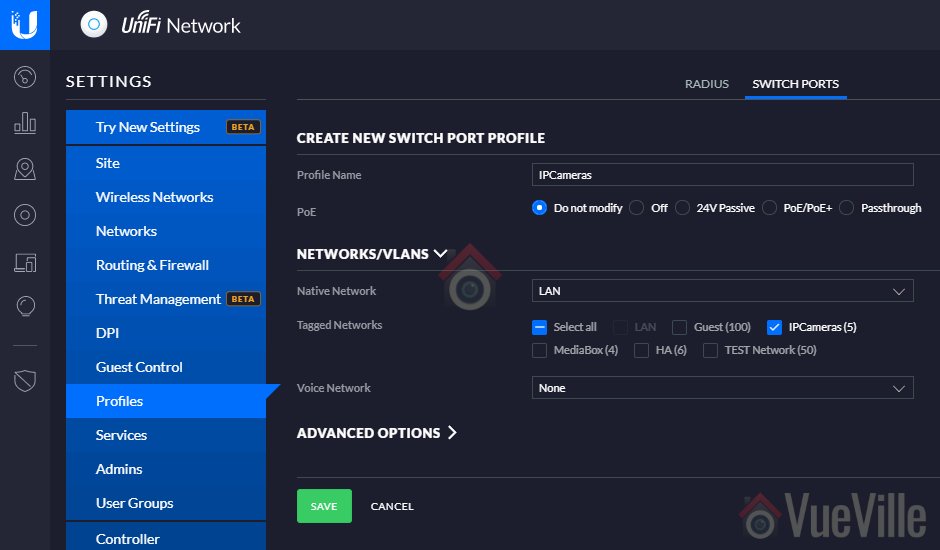
Now one of our cameras ordered from China is on the V5.2.5 multi-language version and we are perfectly happy with it. We are not too concerned about upgrading the firmware because even though our cameras are connected to the Internet, the entire network is behind a VPN server and this provides a level of security we are happy with. Have a look at our network setup here. So for us, the savings of ordering from China far exceeded the disadvantage of not being able to upgrade the firmware.
Another point to consider is how long you will be using the cameras/NVR. Any device’s firmware will become dangerous to use beyond a certain age (2-3 years?), simply because technology moves so fast these days.
I have installed a Hikvision DS-7716NI-SP/16 with 10 Hikvision bullet and dome cameras. The firmware for NVR is 3.34 and cameras are 5.3 and I keep getting no resource showing up on some of the cameras on the split screen instead of the picture but I can see them if I go to full screen. When I search for recording most of them come up with no resource and I can’t find any recorded video except on a couple of them but the cameras show the motion recording icon on the screen when movement is happening, any suggestions.
Hi Larry,
I can’t say why this is happening, but removing and adding the cameras may help.
Hello
My name is Moshe Lahav from Israel
I want to install a security system in my house.
I need your help to define a system which will be based on Hikvision products:
1. Four 6MP IP cameras (DS-2CD4A65F-IZ(H)(S) ??)
2. One compatibe NVR
Thank you
Moshe Lahav
Hi Moshe, I had replied to your message by email but have not seen a response. I hope you found a solution. If not, you can try this Hikvision NVR that can get record upto 6MP: Hikvision DS-7716NI-SP/16. The cheaper Hikvision NVRs only record upto 5MP.
Cheers!
Hello, I found this to be a good article. especially the naming conventions. I was wondering if you knew of a guide for the NVRs. I can’t make sense of their naming conventions.
DS-7604/7608/7616NI-E1/4P(-E2/8P)
DS-7604/7608/7616NI-SE/P
Some are plug and play and some are not, but I don’t know what this means.
Thanks.
Hi Mick,
Very sorry for the late reply. Plug-and-Play means that the NVR has a Power-over-Ethernet (PoE) interface available, that is you can power the cameras over the same ethernet cable that carries data to/from the camera.
From what I can see in this document page 37, only the DS-76XXNI-SE/N PVRs have this PoE feature. However if a seller claims that an NVR is Plug-and-Play, just ask him if it has the PoE feature.
The PoE feature is very useful as you don’t have to worry about how to get power to your cameras, it also vastly extends the possible locations you can place your camera in, as all you need to do is route a single ethernet cable that carries both power and data. Hope this helps!